Madinah, known as Madinah al-Munawwarah (the Radiant City), holds a central place in Islamic history. Unlike Makkah, which was the birthplace of Islam, Madinah became the sanctuary and stronghold of the Muslim community, the place where the Prophet Muhammad ﷺ established the first Islamic state, and where the message of Islam spread with strength and organization.
The city gained its spiritual significance when the Prophet ﷺ migrated here in 622 CE, an event known as the Hijrah, marking the beginning of the Islamic calendar. Madinah was more than just a city; it was a haven for believers who faced persecution in Makkah, a city that embraced compassion, justice, and faith. The Masjid al-Nabawi, built by the Prophet ﷺ himself, became a center for worship, learning, and community life.
A Heartbreaking Incident: The Sacrifice of Hazrat Sumayyah (Though She Was in Makkah, the Spirit Resonates in Madinah)
While many incidents are tied to Makkah, Madinah became the home of the companions who carried the spirit of sacrifice and faith with them. One such moving story is that of Hazrat Bilal ibn Rabah (RA), a former slave who endured unimaginable hardship for his faith before migrating to Madinah.
Bilal’s story breaks the heart yet uplifts the soul. Tortured by his master in Makkah for accepting Islam, he was repeatedly forced onto the scorching desert sands, a heavy stone on his chest, and was denied water. Yet he would cry out:
"Ahad, Ahad!" (One, One!) — proclaiming the oneness of Allah despite unbearable suffering.
After the Hijrah, Bilal was among the first to settle in Madinah, where he found freedom, love, and a community that respected and honored his sacrifice. He became the first Muezzin of Islam, calling believers to prayer from the minbar of Masjid al-Nabawi. Every time his voice echoed through Madinah, it reminded the believers of resilience, devotion, and the cost of faith.
The Heart of the Companions in Madinah
Madinah is not just remembered for the Prophet ﷺ, but for the companions (Sahaba) who lived there. Stories of hardship, patience, and selflessness abound. For instance, Abu Bakr (RA), the Prophet’s closest friend, would often walk through the city offering charity, teaching lessons of humility and love. Hazrat Umar (RA), who would later become Caliph, maintained justice and simplicity even as the city grew into the political center of Islam.
The streets of Madinah witnessed not only joy and the growth of Islam but also sorrow, as many companions lost their lives defending the faith in battles such as Uhud and Badr. Yet each heartbreak became a lesson in sacrifice, loyalty, and trust in Allah.
A City of Eternal Spiritual Significance
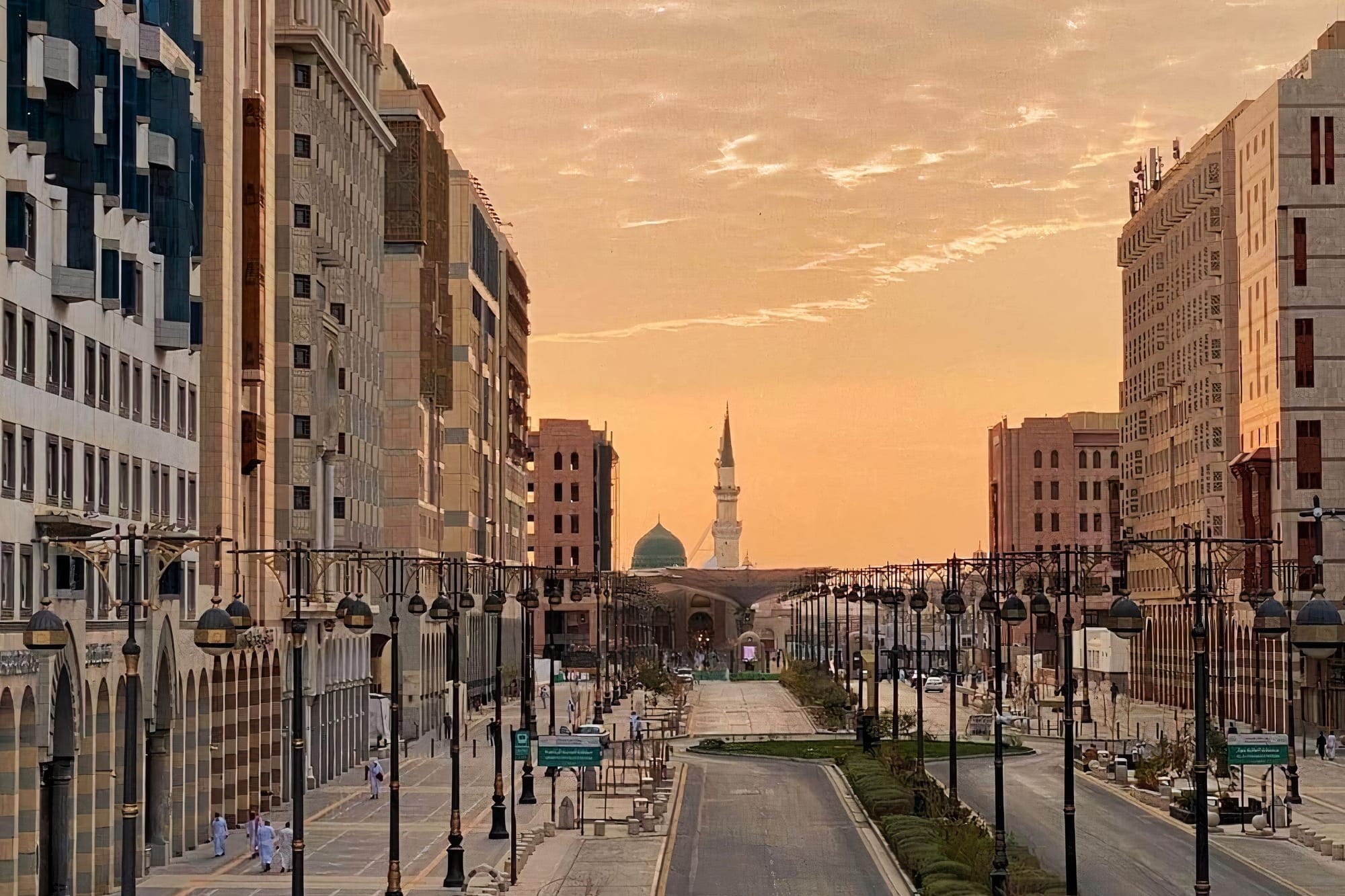
Today, Madinah continues to inspire Muslims worldwide. Pilgrims visiting Masjid al-Nabawi feel the echoes of these sacrifices. The Rawdah — the area between the Prophet’s ﷺ pulpit and his grave — is a place where hearts are filled with reflection, gratitude, and sometimes tears for the companions whose devotion shaped Islam.
The story of Bilal ibn Rabah and others reminds us that the blessings of Madinah are intertwined with the sacrifices of those who endured pain for faith. Every step in this city connects believers with centuries of devotion, resilience, and spiritual awakening.
The Spiritual History of Madinah: A City of Faith and Sacrifice
By: Zubair Ansari
History
31 Dec 2025